Built the visual identity and product flows for a pirate themed NFT community. Most NFT projects feel like cash grabs, this one was different.
Project Overview
Role: Product and Brand Designer
Client: Pirate Crew
Timeline: 6 weeks, 2025
Scope: Brand identity & product design
I led design end-to-end as the multidisciplinary designer on Pirate Crew; owning product, UX, and visual identity. Working closely with the founder, I moved between strategy and craft: ideating features, shaping product direction, and translating the vision into a cohesive experience.
Problem Statement
Most NFT platforms at the time were extractive and boring, users felt like their wallets were being drained or they were members of something not meaningful. They'd mint, hold, and lurk, with little reason to stay engaged beyond speculation. We wanted Pirate Crew to flip this dynamic entirely: the community shouldn't feel like passive holders, they should feel like an actual crew i.e. part of a cult-like movement with a shared identity, rituals, and reasons to show up every day.
The core challenge: How do we turn an NFT collection into a gamified experience where engagement feels rewarding, the interface feels alive, and every user feels like they belong to something bigger than themselves?
Process
Research: I started by studying how successful NFT communities gamified their products & what made people stay, what made them evangelize, and where most platforms lost their users. I focused specifically on crypto-native behaviors: how this audience thinks about ownership, status, and belonging.
UX & Flows: From those insights, I designed the full onboarding journey and core user flows — wallet connection, minting, staking, and reward claiming. The goal was to make every interaction feel simple for newcomers but exciting and rich for power users. Connecting a wallet shouldn't feel like a tax; minting should feel like an experience to be remembered.
Visual Identity & NFT Assets: I designed the entire pirate-themed universe: the NFT artwork, the visual language, and everything that gave the project its cult-like feel. Every surface, from the museum showcase to the looting animations, was crafted to reinforce the same story.
Gamified Interface: The looting experience, leaderboard, and reward interactions were where storytelling met interaction design. I leaned into playful micro-interactions and pirate-world metaphors (treasure, crews, loot) so that even routine actions felt like they belonged to a larger narrative.
Collaboration: Throughout, I worked closely with the founder to refine features and pressure tested ideas, making sure what we shipped felt polished, on-brand, and true to the crew ethos.
Solution
We designed an ecosystem in which each component reinforces the pirate identity and pulls users deeper into the world:
The Showcase: A premium, museum-themed gallery where users browse, buy, stake, unstake, and even burn NFTs. The museum framing made ownership feel curated and prestigious. Your NFTs weren't just JPEGs in a wallet, they were artifacts on display.
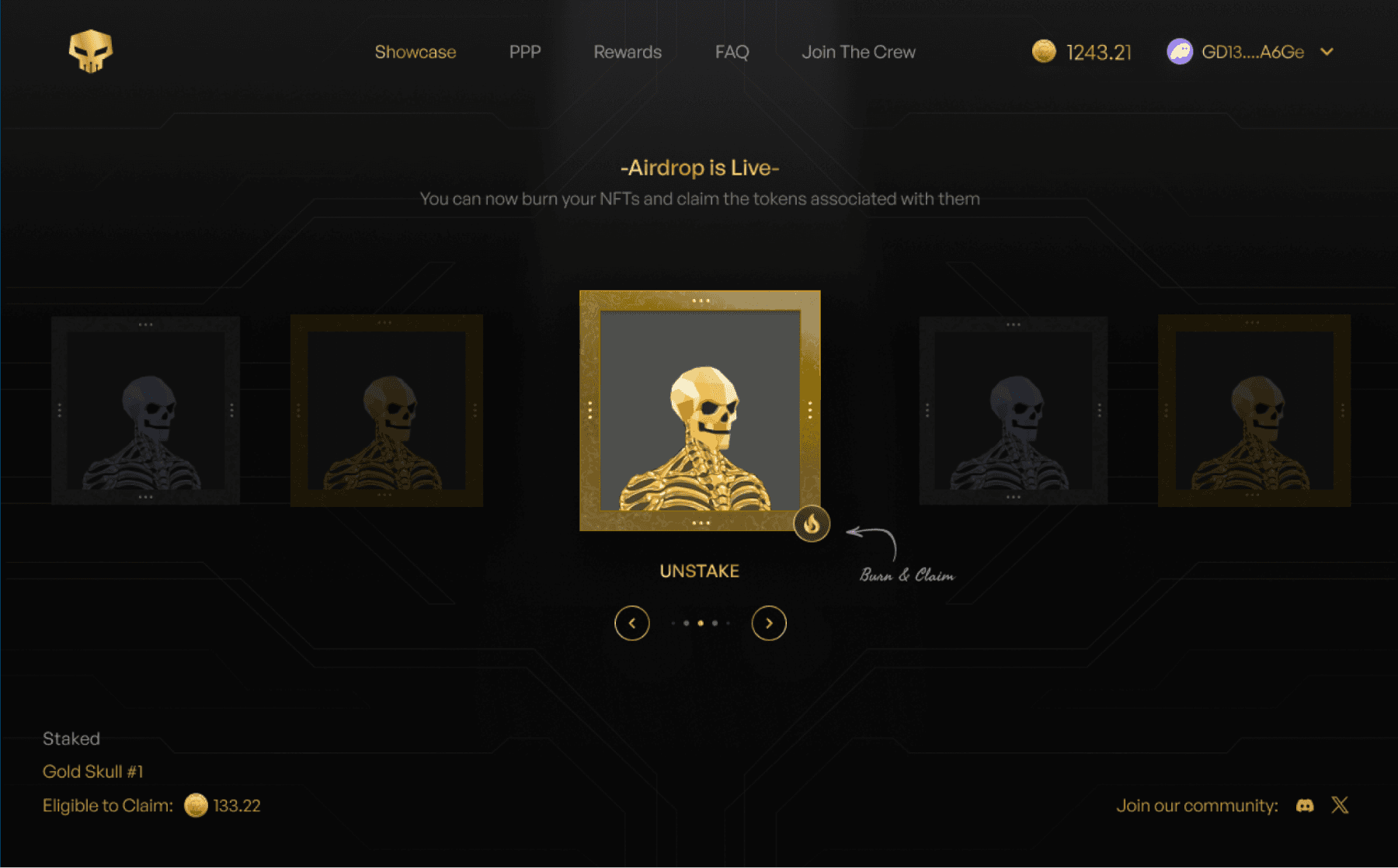
The Point System: Points scaled with both the number of NFTs staked and the duration of the stake. This rewarded committed crew members rather than flippers, reinforcing the "we're in this together" ethos.
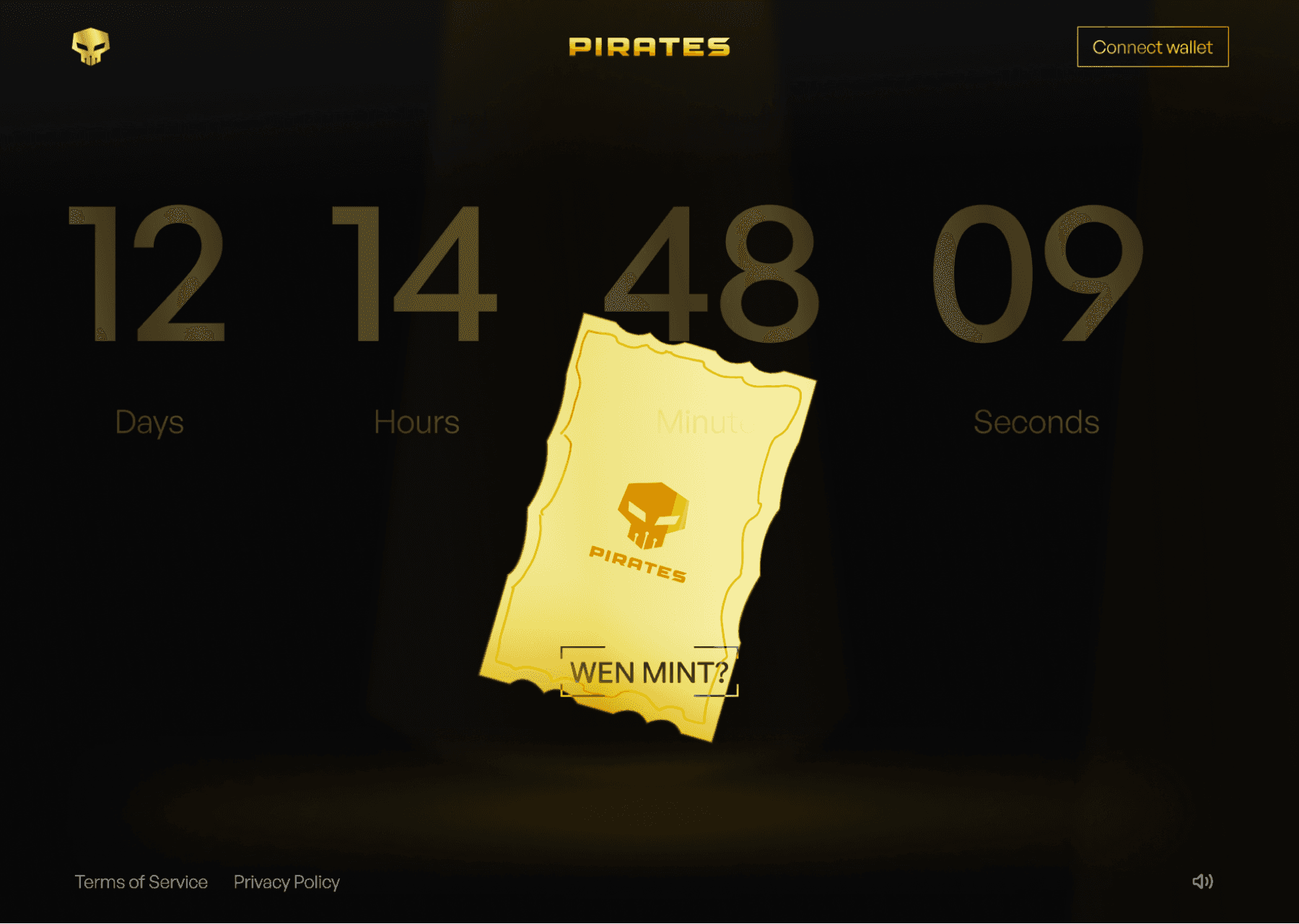
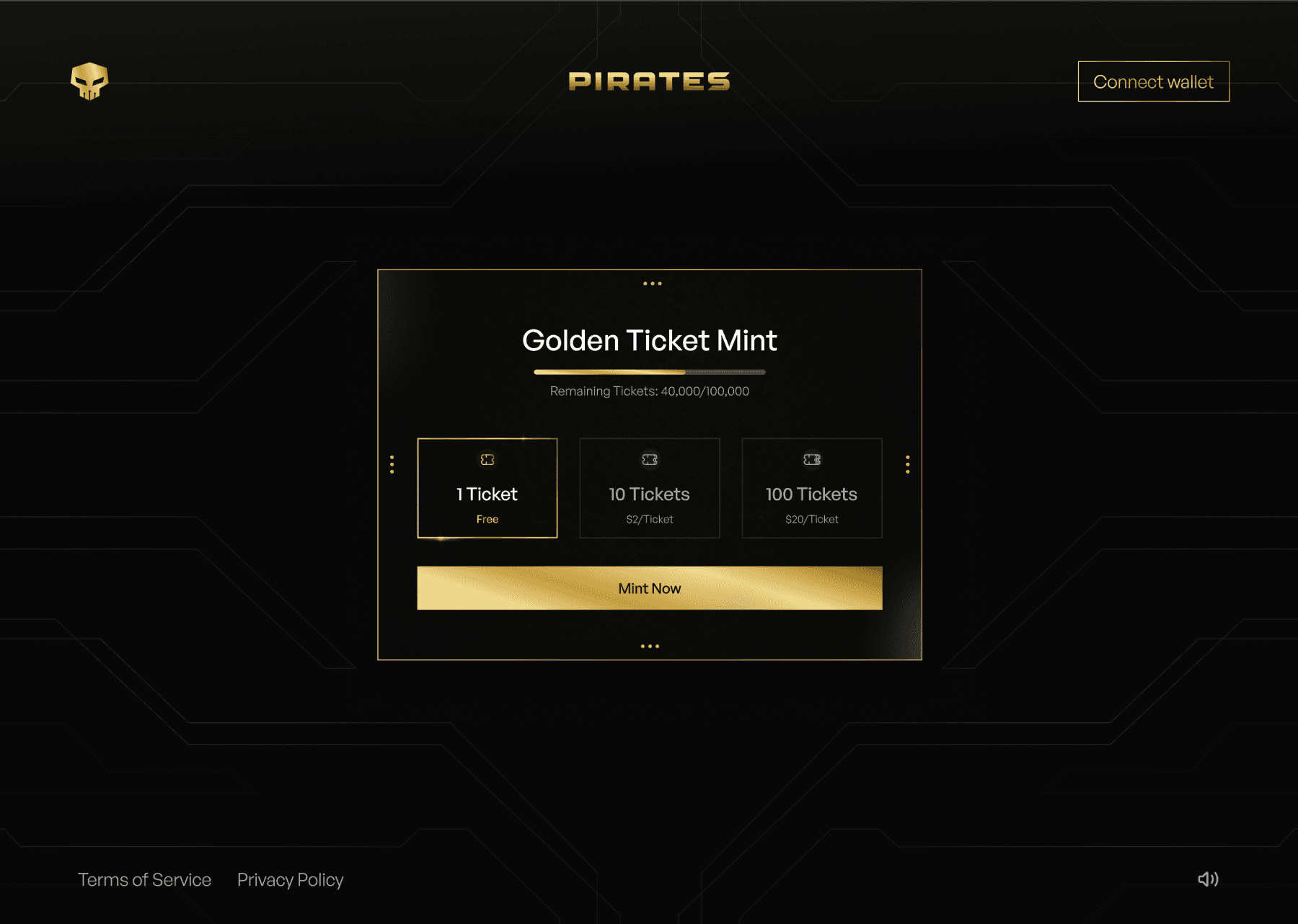
Rewards: Staked NFTs generated ongoing rewards, supplemented by periodic airdrops. The looting experience was designed to feel playful and immersive & claiming rewards felt like opening a treasure, not clicking buttons. Users also get multiple other rewards like Pirates Golden Ticket mint whitelist etc.
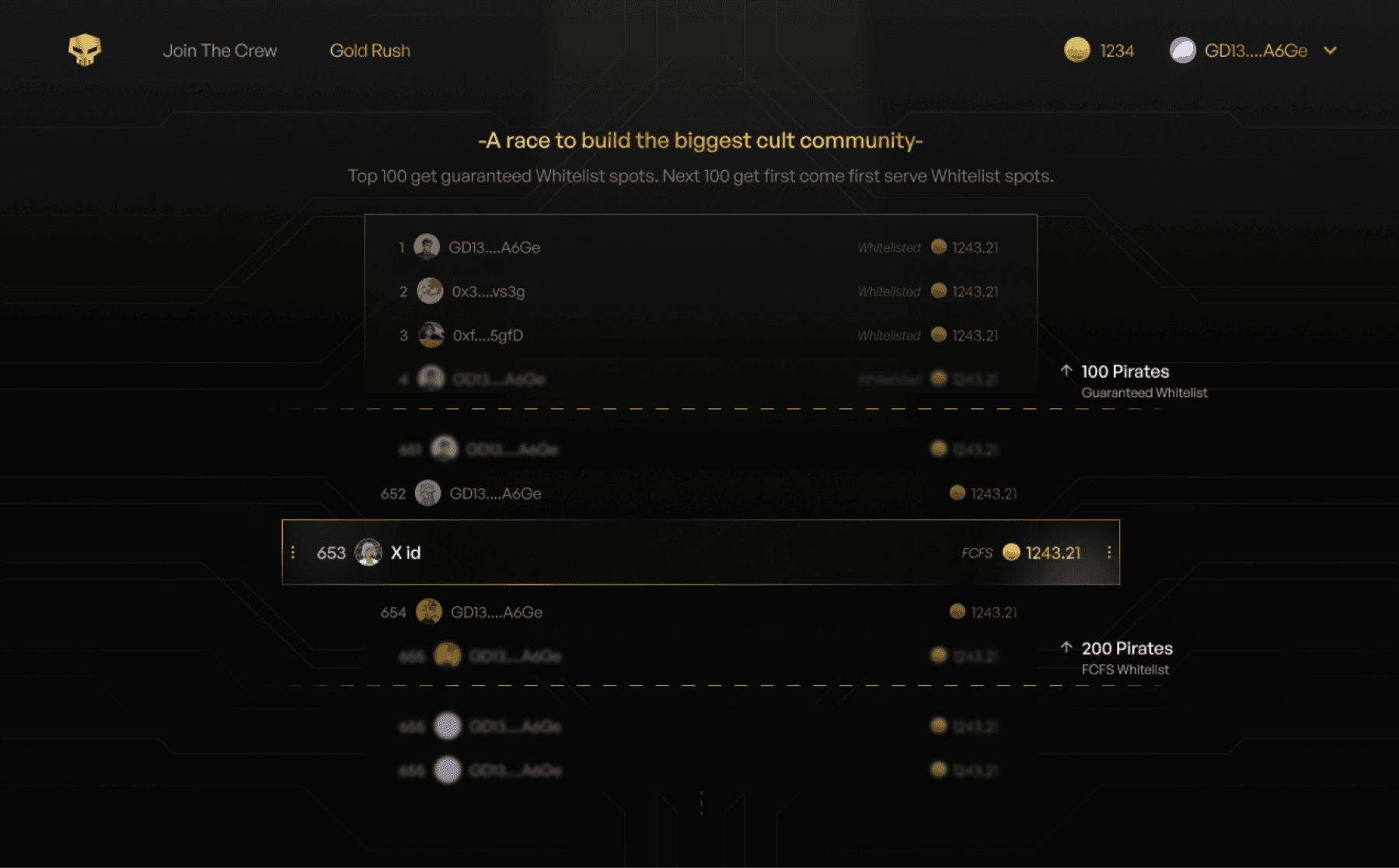
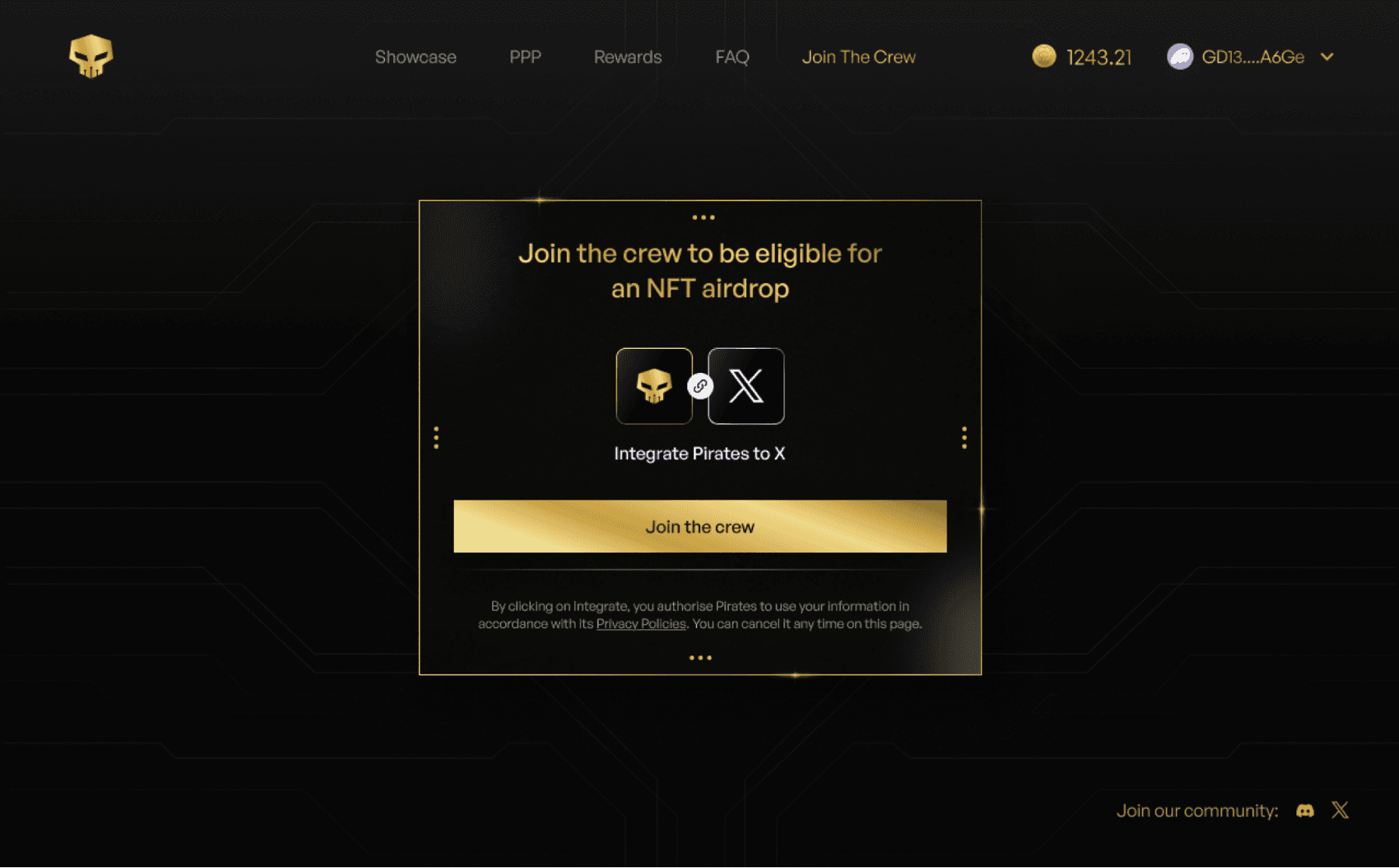
Join the Crew: Staking an NFT made users eligible for airdrops, but the real hook was the leaderboard. We built a Chrome extension that tracked the social activity (like tweeting about Pirate Crew), and rankings were determined by how loudly and consistently you repped the crew. This turned community advocacy into a visible, competitive game.
Social Branding